
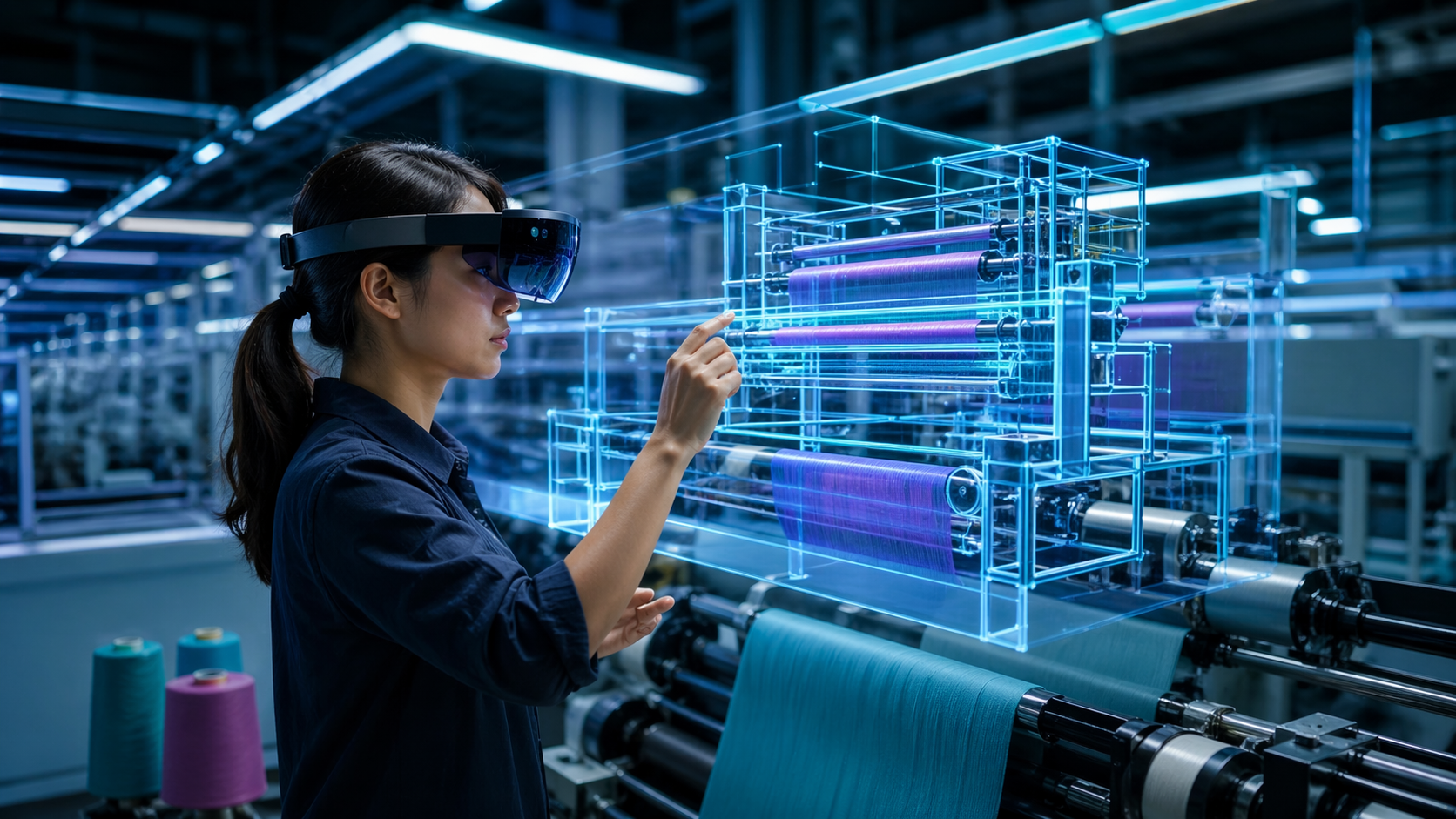
Textile manufacturing is undergoing a digital transformation as companies seek smarter ways to improve efficiency and reduce environmental impact. Digital twin technology—virtual replicas of physical systems—allows manufacturers to simulate, monitor, and optimize production processes in real time. By bridging the physical and digital worlds, digital twins provide actionable insights that enhance decision-making and operational performance.
As sustainability becomes a priority, textile producers are adopting digital twins to minimize waste, conserve resources, and improve product quality. This technology enables proactive management of production systems, helping organizations achieve both economic and environmental goals in an increasingly competitive industry.
Concept Overview
Overview Table: Digital Twins in Textile Manufacturing
| Aspect | Description |
|---|---|
| Core Technology | Virtual model of physical production systems |
| Primary Goal | Process optimization and efficiency improvement |
| Key Benefit | Real-time monitoring and predictive insights |
| Data Sources | Sensors, machines, and production systems |
| Applications | Design, production, maintenance, sustainability |
| Outcome | Reduced costs and environmental impact |
A digital twin is a dynamic digital representation of a physical asset, process, or system. In textile manufacturing, it replicates machines, workflows, and production environments, allowing manufacturers to test scenarios without disrupting actual operations.
This virtual environment enables continuous monitoring and analysis. By identifying inefficiencies and predicting potential issues, digital twins help optimize performance and reduce downtime.
Simulation Capabilities
- Virtual models simulate entire production lines and workflows.
- Scenario testing evaluates different production strategies.
- Real-time data integration ensures accurate simulations.
- Predictive modeling forecasts outcomes and performance.
Simulation is a core strength of digital twin technology. Manufacturers can experiment with process changes, material usage, and machine settings in a risk-free environment. This reduces the need for costly trial-and-error in physical production.
These capabilities also support innovation. Companies can explore new designs and production methods, accelerating development while maintaining quality standards.
Process Optimization
- Identification of bottlenecks in production workflows.
- Optimization of machine performance and resource allocation.
- Reduction of downtime through predictive maintenance.
- تحسين efficiency across multiple production stages.
Digital twins enable precise process optimization by providing detailed insights into every stage of manufacturing. By analyzing data from sensors and machines, they highlight inefficiencies and suggest improvements.
This leads to better resource utilization and increased productivity. Manufacturers can achieve higher output while maintaining consistent quality.
Sustainability Benefits
- Reduction of material waste through precise simulations.
- Optimization of energy consumption in production processes.
- Support for eco-friendly design and manufacturing practices.
- Monitoring of environmental impact in real time.
Sustainability is a major driver for adopting digital twins in textile manufacturing. By optimizing processes and reducing waste, companies can lower their environmental footprint and meet regulatory requirements.
Digital twins also enable continuous improvement. By tracking environmental metrics, manufacturers can identify opportunities for further sustainability gains.
Data Integration
- IoT sensors provide real-time operational data.
- Cloud platforms enable scalable data storage and processing.
- Analytics tools interpret data for actionable insights.
- Integration with enterprise systems enhances coordination.
Data integration is essential for the effectiveness of digital twins. By combining information from multiple sources, manufacturers gain a comprehensive view of their operations.
This holistic perspective supports better decision-making and ensures that all aspects of production are aligned with organizational goals.
Predictive Maintenance
- Early detection of equipment issues reduces downtime.
- Maintenance schedules are optimized based on data insights.
- تكلفة repairs is reduced through proactive intervention.
- Equipment lifespan is extended through better management.
Predictive maintenance is one of the most valuable applications of digital twins. By analyzing machine data, the system can identify signs of wear or failure before they occur.
This proactive approach minimizes disruptions and reduces maintenance costs. It also improves reliability and overall system performance.
Implementation Challenges
- High initial investment in technology and infrastructure.
- Complexity of integrating digital twins with existing systems.
- Need for skilled personnel to manage and analyze data.
- Data security and privacy concerns.
Despite their benefits, digital twins present implementation challenges. Companies must invest in technology, training, and system integration to fully realize their potential.
Addressing these challenges requires strategic planning and collaboration across departments. Over time, the benefits often outweigh the initial costs.
Industry Applications
- Design optimization for new textile products.
- Production planning and scheduling improvements.
- Quality control through real-time monitoring.
- Supply chain coordination and efficiency.
Digital twins are being applied across various aspects of textile manufacturing. From design to production and distribution, this technology enhances efficiency and innovation.
These applications demonstrate the versatility of digital twins and their potential to transform the industry.
Future Scope
- Integration with artificial intelligence for advanced analytics.
- Expansion of real-time monitoring capabilities.
- Increased adoption across small and medium enterprises.
- Continuous improvement in sustainability practices.
The future of digital twins in textile manufacturing is promising. Advances in technology will further enhance their capabilities, making them more accessible and effective.
As adoption grows, digital twins will play a key role in driving innovation and sustainability in the textile industry.
Final Thoughts
Digital twin technology is revolutionizing textile manufacturing by enabling virtual simulation, process optimization, and sustainability improvements. By creating accurate digital representations of physical systems, manufacturers can make informed decisions and enhance operational efficiency.
While challenges exist, the long-term benefits of digital twins are substantial. Their ability to reduce costs, improve quality, and support sustainable practices makes them a valuable tool for the future of textile manufacturing.