
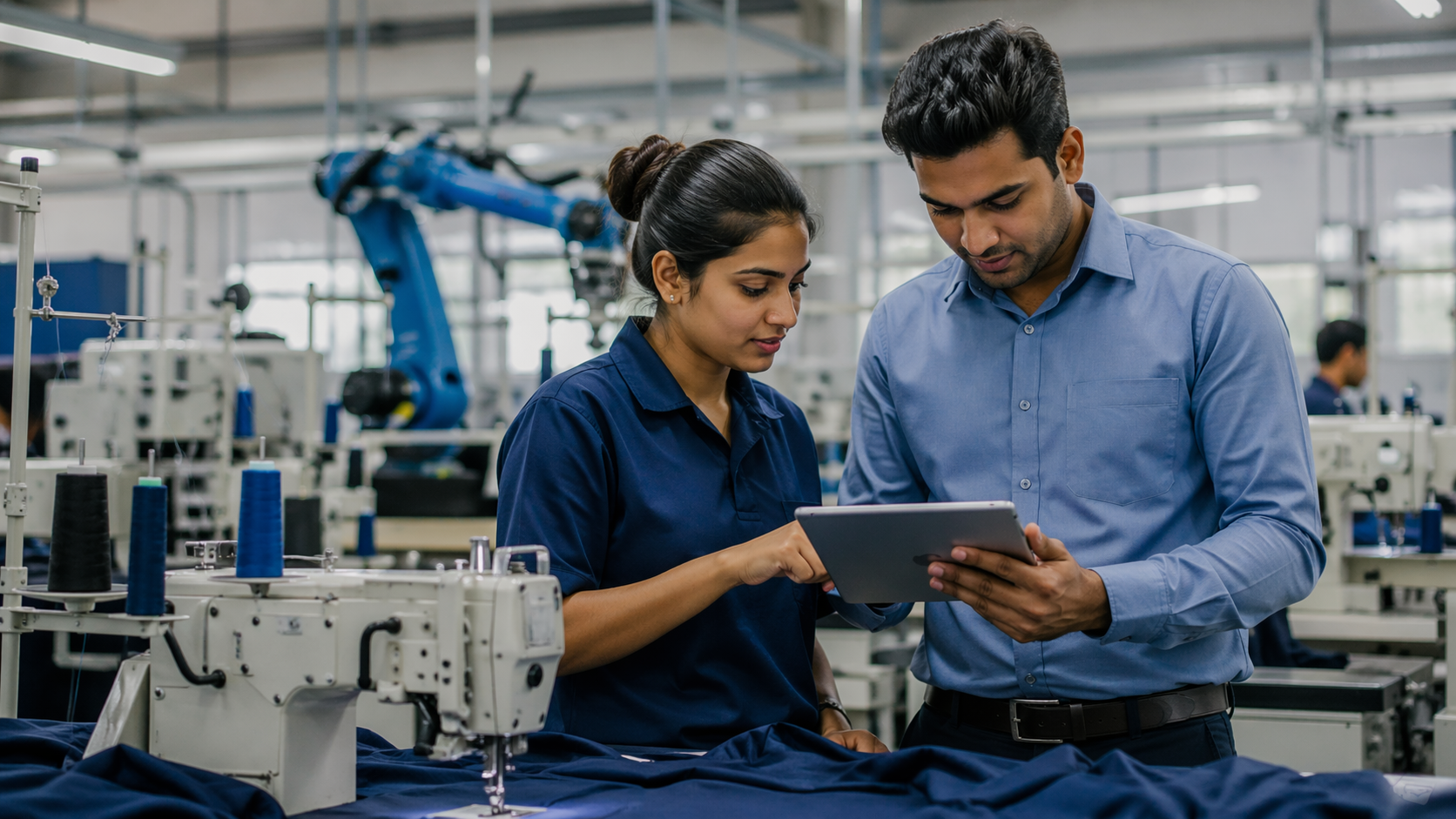
The textile industry is undergoing a profound shift as it embraces Industry 4.0 technologies, redefining production, efficiency, and workforce dynamics. Digital transformation is not only about automation and smart systems but also about preparing human resources to work alongside advanced machines. This transition is creating both opportunities and challenges for textile manufacturers worldwide.
As factories become more connected and data-driven, the need for reskilling and upskilling the workforce has become critical. Bridging the gap between human capabilities and machine intelligence ensures that innovation leads to inclusive growth rather than workforce displacement. The future of textiles depends on balancing technology adoption with human adaptability.
Industry Snapshot
Overview of Digital Transformation in Textile Industry 4.0
| Element | Description |
|---|---|
| Industry 4.0 Concept | Integration of digital technologies in manufacturing |
| Key Technologies | AI, IoT, automation, data analytics |
| Workforce Need | Reskilling and upskilling |
| Primary Goal | Efficiency and innovation |
| Key Challenge | Human–machine integration |
Digital Evolution
Digital transformation in the textile sector involves the adoption of advanced technologies such as automation, artificial intelligence, and the Internet of Things (IoT). These technologies enable real-time monitoring, predictive maintenance, and optimized production processes. As a result, manufacturers can achieve higher efficiency and reduced operational costs.
This evolution also changes the nature of work. Traditional manual tasks are being replaced or augmented by digital systems, requiring workers to adapt to new roles. Understanding and managing this transition is essential for maintaining productivity and competitiveness.
Core Technologies
- Artificial intelligence for predictive analytics and quality control
- IoT devices for real-time monitoring of machinery and processes
- Robotics and automation for repetitive and precision tasks
- Data analytics for decision-making and performance optimization
These technologies form the backbone of Industry 4.0. Their integration into textile manufacturing creates smarter and more responsive production environments.
Skill Requirements
- Technical skills in operating and maintaining digital systems
- Data literacy for interpreting and using analytics
- Problem-solving abilities in automated environments
- Adaptability to continuous technological change
The shift toward digital systems requires a workforce that is both technically skilled and adaptable. Continuous learning becomes a necessity rather than an option.
Reskilling Strategies
Reskilling initiatives are essential for preparing workers to meet new industry demands. Training programs, workshops, and online courses help employees acquire the necessary skills. Collaboration between industry and educational institutions can further enhance these efforts.
Organizations must also invest in internal training systems. Providing employees with opportunities to learn and grow not only improves performance but also boosts morale and retention.
Human–Machine Collaboration
The integration of humans and machines is a defining feature of Industry 4.0. Rather than replacing workers, technology is designed to augment human capabilities. Collaborative systems allow humans to focus on creative and strategic tasks while machines handle repetitive operations.
Effective collaboration requires clear communication and well-designed interfaces. Ensuring that workers can easily interact with digital systems is key to maximizing productivity and minimizing errors.
Operational Benefits
Digital transformation offers significant benefits, including increased efficiency, reduced waste, and improved product quality. Automated systems ensure consistency and precision, while data-driven insights enable better decision-making.
These benefits also extend to supply chain management. Enhanced visibility and coordination improve responsiveness and reduce delays, contributing to overall operational excellence.
Implementation Barriers
Despite its advantages, digital transformation faces several challenges. High initial investment costs, lack of skilled labor, and resistance to change can hinder adoption. Addressing these barriers requires strategic planning and strong leadership.
Another challenge is ensuring data security and system reliability. As operations become more digital, protecting sensitive information becomes increasingly important.
Future Workforce
The workforce of the future will need to be more versatile and technologically proficient. Continuous learning and adaptability will be key traits for success. Employers must create environments that support ongoing skill development.
Educational systems also play a crucial role in preparing future workers. Integrating digital skills into curricula ensures that new entrants to the workforce are ready for Industry 4.0 challenges.
Summing Up
Digital transformation in Textile Industry 4.0 is reshaping both production processes and workforce requirements. Bridging the human–machine gap through effective reskilling strategies is essential for sustainable growth and innovation.
By investing in technology and people simultaneously, the textile industry can achieve a balanced and inclusive transformation. This approach ensures that advancements benefit not only businesses but also the workforce that drives them.