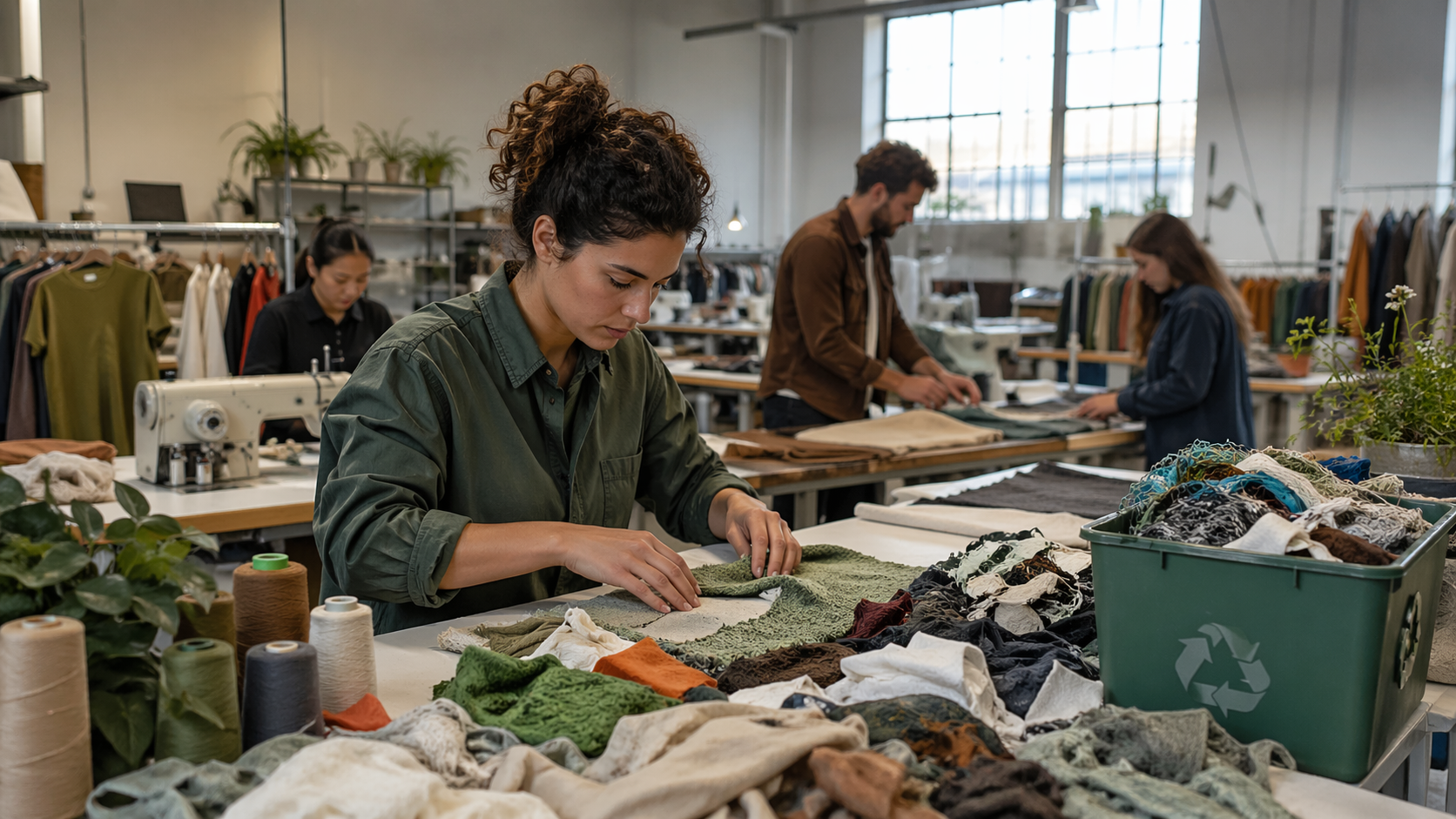
The textile industry is one of the largest contributors to global waste and environmental degradation, making sustainability a critical priority. Circular economy strategies are transforming how textiles are produced, used, and recycled by focusing on minimizing waste and maximizing resource efficiency. This shift moves the industry away from the traditional linear model of “produce–use–dispose.”
By adopting closed-loop systems, manufacturers can reuse materials, reduce environmental impact, and create long-term value. Circular practices not only support sustainability goals but also enhance competitiveness by improving efficiency and reducing costs. The transition to circularity is becoming essential for the future of textile manufacturing.
Circular Snapshot
Overview of Circular Economy in Textile Manufacturing
| Element | Description |
|---|---|
| Circular Economy | System focused on reuse and resource efficiency |
| Key Objective | Waste reduction and sustainability |
| Core Processes | Recycling, reuse, and regeneration |
| Production Model | Closed-loop manufacturing |
| Business Impact | Cost savings and environmental benefits |
Linear Limits
Traditional textile manufacturing follows a linear model where raw materials are converted into products that are eventually discarded. This approach leads to excessive waste, resource depletion, and environmental pollution. The limitations of this model have become increasingly evident as global demand for textiles continues to grow.
Environmental concerns, including water usage, chemical pollution, and landfill accumulation, highlight the need for change. Circular economy strategies address these challenges by redesigning production systems to minimize waste and maximize resource utilization.
Core Principles
- Designing products for durability and recyclability
- Extending product life through repair and reuse
- Recovering materials at the end of product life
- Reducing reliance on virgin resources
These principles form the foundation of circular textile systems. By embedding sustainability into every stage of the product lifecycle, manufacturers can create more resilient and efficient operations.
Waste Reduction
- Minimizing fabric waste during cutting and production
- Reusing leftover materials in new products
- Implementing efficient inventory and production planning
- Reducing chemical and water usage
Waste reduction is often the first step toward circularity. By optimizing processes and resources, manufacturers can significantly decrease environmental impact while improving profitability.
Recycling Systems
Recycling plays a crucial role in circular textile manufacturing. Mechanical and chemical recycling processes allow fibers to be recovered and reused in new products. These systems reduce the need for raw materials and lower environmental impact.
Advances in recycling technology are improving the quality and efficiency of recovered materials. This enables manufacturers to produce high-quality textiles from recycled inputs, supporting closed-loop production.
Closed-Loop Models
Closed-loop production systems aim to eliminate waste by continuously reusing materials within the manufacturing cycle. In this model, products are designed to be easily disassembled and recycled, ensuring that materials remain in use for as long as possible.
Implementing closed-loop models requires collaboration across the supply chain. Manufacturers, suppliers, and consumers must work together to create systems that support material recovery and reuse.
Technology Role
Technology is a key enabler of circular economy strategies. Digital tools such as data analytics, tracking systems, and automation help monitor material flows and optimize resource use. These technologies improve transparency and efficiency across the supply chain.
Innovations in material science also contribute to circularity. Developing sustainable fibers and biodegradable materials supports the transition to more environmentally friendly production systems.
Business Benefits
Circular economy strategies offer significant business advantages. Reduced material costs, improved efficiency, and enhanced brand reputation are some of the key benefits. Companies that adopt circular practices can also meet regulatory requirements and consumer expectations more effectively.
In addition, circular models create new revenue streams. Services such as recycling, repair, and resale provide opportunities for growth and innovation.
Implementation Barriers
Despite its benefits, implementing circular economy strategies can be challenging. High initial investment costs, technological limitations, and lack of infrastructure can hinder adoption. Overcoming these barriers requires strategic planning and collaboration.
Consumer behavior also plays a role. Encouraging sustainable consumption patterns is essential for the success of circular systems. Education and awareness initiatives can help drive this change.
Closing Perspectives
Circular economy strategies are reshaping textile manufacturing by promoting sustainability and efficiency. From waste reduction to closed-loop production, these approaches offer a comprehensive solution to environmental challenges.
As the industry continues to evolve, adopting circular practices will become increasingly important. By embracing innovation and collaboration, textile manufacturers can create a more sustainable and resilient future.