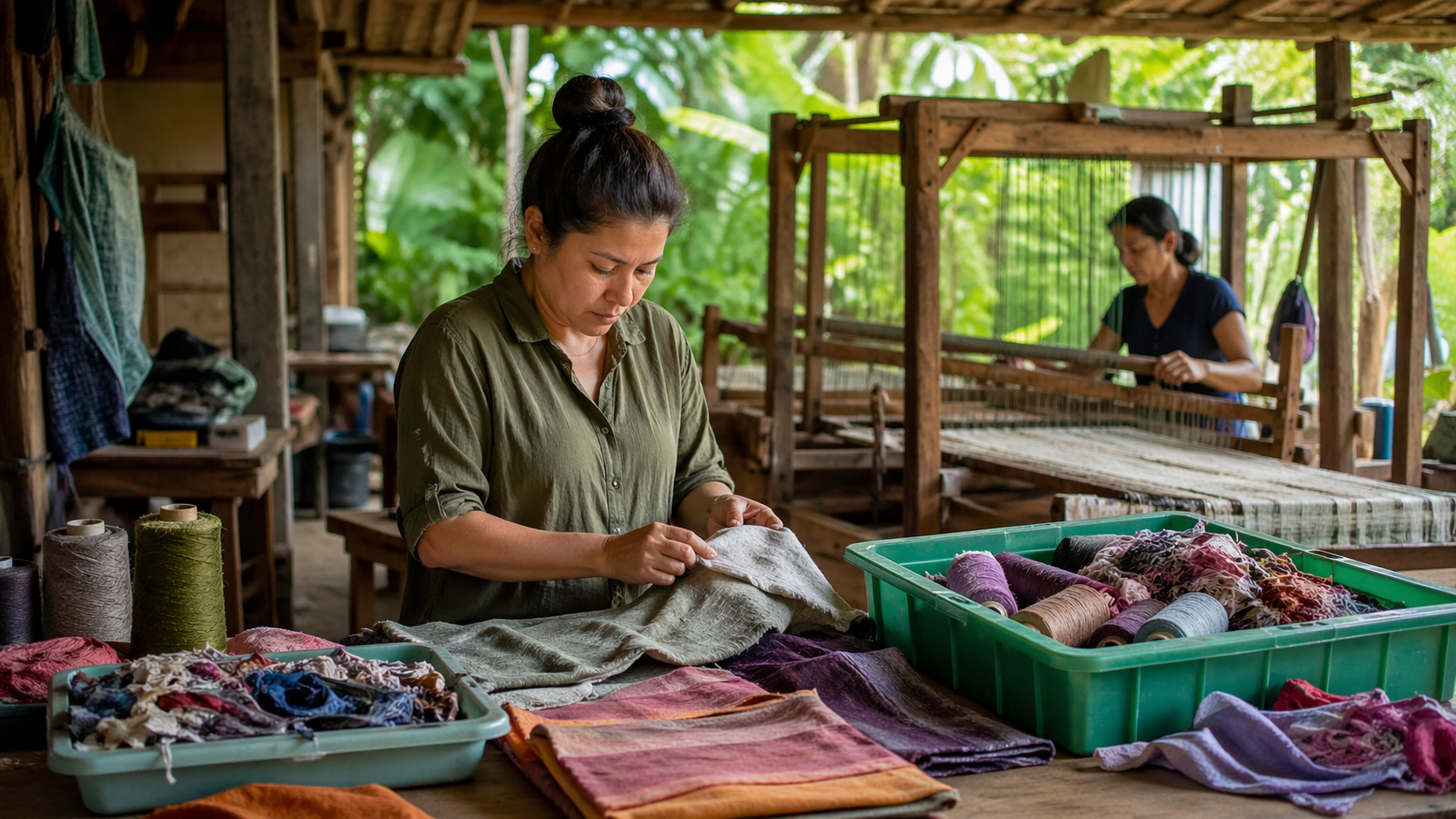
Costa Rica’s textile sector is gradually transitioning from traditional linear production models toward circular systems that emphasize sustainability and resource efficiency. Historically, textile manufacturing has relied on a “take-make-dispose” approach, contributing to waste generation and environmental degradation. However, growing awareness of sustainability and global market pressures are encouraging the adoption of circular economy principles.
A circular textile economy focuses on extending the lifecycle of materials, reducing waste, and reintegrating resources back into production. In Costa Rica, this shift is influenced by environmental policies, international trade dynamics, and the need to remain competitive in global markets. By embracing circular practices, the industry aims to balance economic growth with ecological responsibility.
Circular Snapshot
Key System Components
| Component | Description | Sustainability Benefit |
|---|---|---|
| Waste Valorization | Converting textile waste into resources | Reduced landfill impact |
| Recycling Models | Mechanical and chemical recycling | Material recovery |
| Closed-Loop Systems | Reusing materials in production | Resource efficiency |
| Eco-Design | Designing for durability and reuse | Extended product lifecycle |
These components form the foundation of a circular textile economy. By integrating waste valorization, recycling, and closed-loop production, Costa Rica’s textile sector can reduce environmental impact while improving efficiency. Each element contributes to a system where materials are continuously reused rather than discarded.
The adoption of these practices requires collaboration across the supply chain. Manufacturers, policymakers, and consumers must work together to create a sustainable ecosystem that supports circularity. This collective effort is essential for achieving long-term success.
Waste Valorization
- Textile scraps converted into new fibers or products
- Industrial byproducts are reused in other sectors
- Energy recovery from non-recyclable materials
- Innovation in upcycling techniques
Waste valorization transforms textile waste into valuable resources, reducing the need for virgin materials. In Costa Rica, initiatives are emerging to repurpose production scraps into new textiles or alternative products. This approach not only minimizes waste but also creates new economic opportunities.
By viewing waste as a resource, companies can improve efficiency and reduce costs. Valorization processes also support environmental goals by decreasing landfill usage and lowering carbon emissions. This strategy is a key driver of circular transformation.
Recycling Models
- Mechanical recycling for fiber recovery
- Chemical recycling for material regeneration
- Sorting technologies improve efficiency
- Collaboration with recycling facilities enhances capacity
Recycling models are central to maintaining material flow within the textile industry. Mechanical recycling involves breaking down fabrics into fibers, while chemical recycling restores materials to their original state. Both methods contribute to reducing reliance on raw materials.
In Costa Rica, the development of recycling infrastructure is critical for scaling these processes. Partnerships with local and international organizations can help expand capacity and improve efficiency. Advanced sorting technologies further enhance the effectiveness of recycling systems.
Closed Loop
Closed-loop production systems aim to keep materials in continuous use by reintegrating them into the manufacturing process. This approach reduces waste and maximizes resource efficiency, aligning with the principles of a circular economy. In Costa Rica, companies are exploring ways to implement closed-loop systems within their operations.
Achieving a fully closed-loop system requires innovation in design, production, and logistics. Materials must be designed for recyclability, and supply chains must be structured to support material recovery. While challenges remain, the potential benefits make this approach a key focus for the industry.
Eco Design
- Durable materials extend product lifespan
- Modular designs enable easy repair
- Sustainable fibers reduce environmental impact
- Lifecycle thinking guides production decisions
Eco-design plays a crucial role in supporting circularity by ensuring that products are created with their entire lifecycle in mind. In Costa Rica, designers are increasingly incorporating sustainability into their processes, focusing on durability and recyclability.
By prioritizing eco-design, companies can reduce waste and improve product value. This approach also aligns with consumer demand for sustainable products, enhancing market competitiveness. Eco-design is a foundational element of a successful circular textile economy.
Economic Impact
- Reduced material costs through reuse
- New business opportunities in recycling
- Job creation in sustainable sectors
- Increased competitiveness in global markets
The transition to a circular textile economy offers significant economic benefits. By reducing reliance on raw materials, companies can lower production costs and improve efficiency. Recycling and waste management also create new industries and employment opportunities.
Costa Rica’s commitment to sustainability enhances its position in international markets. As global demand for eco-friendly products grows, adopting circular practices can provide a competitive advantage. This economic potential supports the long-term viability of the textile sector.
Implementation Challenges
- Limited recycling infrastructure
- High initial investment costs
- Need for technological innovation
- Consumer awareness and participation
Despite its benefits, the transition to a circular textile economy faces several challenges. Infrastructure limitations and high costs can hinder the adoption of recycling and closed-loop systems. Addressing these barriers requires investment and innovation.
Consumer behavior also plays a role in the success of circular initiatives. Increasing awareness and encouraging sustainable practices are essential for creating demand for circular products. Overcoming these challenges is key to achieving widespread adoption.
Policy Support
- Government incentives encourage sustainability
- Regulations promote waste reduction
- Partnerships support industry development
- International agreements influence standards
Policy support is essential for driving the transition to a circular textile economy. Government initiatives can provide incentives for sustainable practices and establish regulations that encourage waste reduction. In Costa Rica, environmental policies play a significant role in shaping industry behavior.
Collaboration between the public and private sectors further strengthens these efforts. By aligning policies with industry needs, Costa Rica can create a supportive environment for circular innovation. This approach ensures that sustainability becomes an integral part of the textile sector.
The Way Forward
The circular textile economy in Costa Rica represents a transformative approach to sustainable development. By integrating waste valorization, recycling models, and closed-loop production, the industry can reduce environmental impact while enhancing economic performance. These practices offer a pathway toward a more resilient and sustainable future.
Continued progress will depend on collaboration, innovation, and commitment across the supply chain. By addressing challenges and leveraging opportunities, Costa Rica can establish itself as a leader in circular textile practices, setting an example for other nations to follow.