
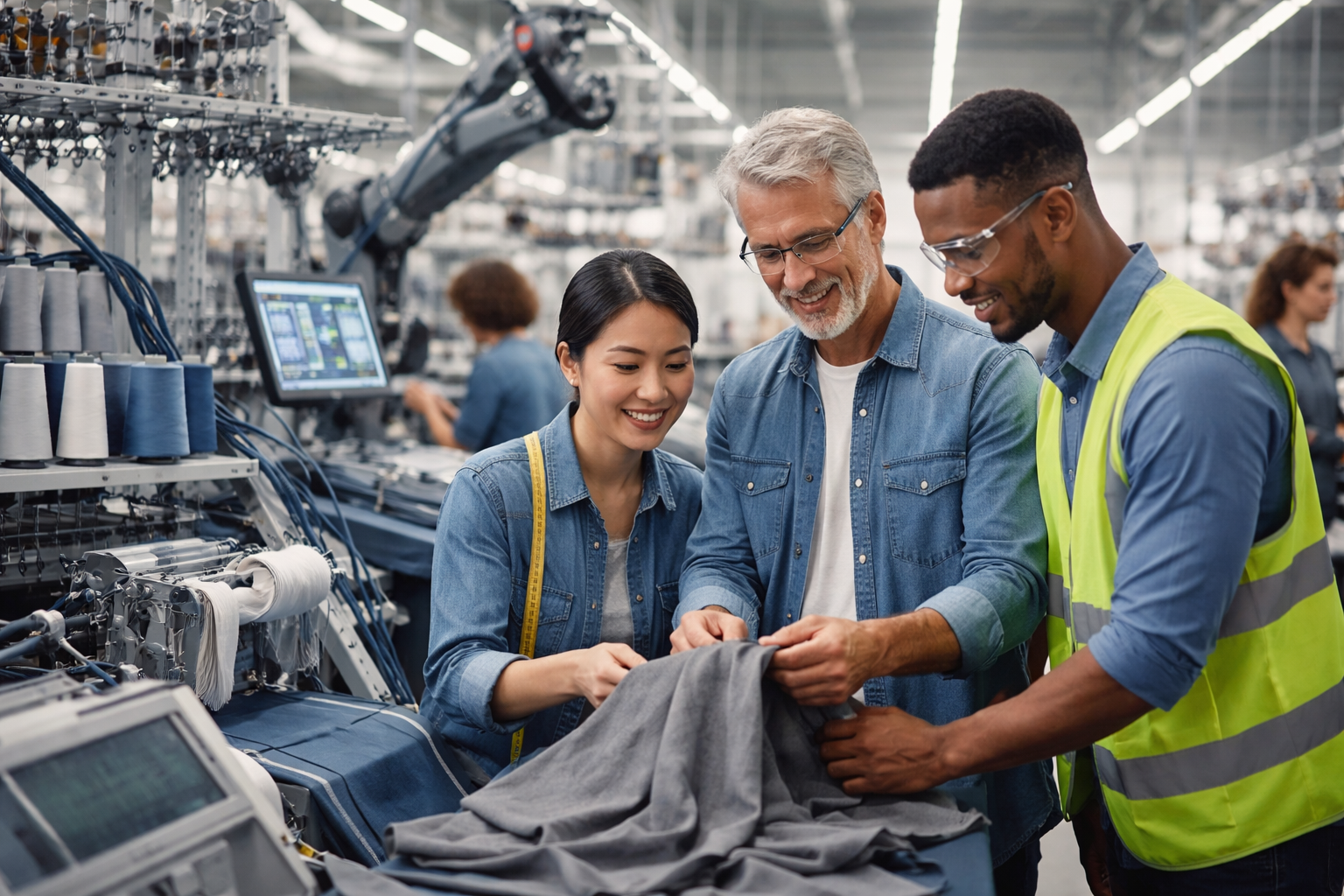
The textile manufacturing sector is experiencing a profound transformation driven by automation, robotics, and digital technologies. While automation improves efficiency, precision, and productivity, it also reshapes the workforce, requiring new skills and adaptability. Manufacturers must balance technological adoption with workforce development to maintain competitiveness and ensure sustainable growth.
Understanding the intersection of workforce skills and automation is critical for modern textile operations. Training, upskilling, and collaboration between humans and machines are key factors that determine operational success in an increasingly automated industry.
Industry Overview
Textile Workforce & Automation Table
| Aspect | Details |
|---|---|
| Focus Areas | Technical proficiency, digital literacy, maintenance, and problem-solving |
| Technologies Used | Robotics, AI-assisted sewing, automated cutting, digital patterning |
| Training Needs | Higher productivity, quality improvement, and labor efficiency |
| Impact | Skill gaps, resistance to change, and integration with human labor |
| Key Challenges | Skill gaps, resistance to change, integration with human labor |
These developments highlight the need for a workforce capable of managing advanced machinery while adapting to evolving production processes.
Automation Technologies
Automation in textiles spans various production stages, including fiber processing, weaving, dyeing, and finishing. Robotics, computer-aided manufacturing, and AI-assisted systems enhance precision, reduce material waste, and accelerate production timelines.
Automated systems also enable greater consistency and scalability, ensuring products meet quality standards while minimizing operational costs. Manufacturers increasingly rely on smart machines for tasks such as automated cutting, sewing, and packaging.
- Robotic arms performing sewing and assembly tasks with high precision
- Automated cutting systems optimize fabric use and reduce waste
- AI-driven pattern recognition for defect detection and quality control
- Digital printing machines ensure accuracy and consistency
- Smart conveyors and handling systems are improving efficiency and safety
By integrating these technologies, textile manufacturers enhance production output and reduce reliance on manual labor for repetitive tasks.
Workforce Skill Development
With automation, traditional textile skills must evolve to include technical, digital, and analytical competencies. Workers need training in operating, monitoring, and maintaining automated equipment.
Upskilling programs are essential to bridge the gap between current capabilities and the demands of modern production. Employees with hybrid skills—combining textile knowledge with technological proficiency—become indispensable in automated environments.
- Technical training for machinery operation and troubleshooting
- Digital literacy programs to manage software-based production systems
- Problem-solving and analytical skills for process optimization
- Maintenance and calibration training for automated equipment
- Continuous learning initiatives keep pace with technological advances
A skilled workforce ensures smooth automation adoption while maintaining product quality and operational efficiency.
Human-Machine Collaboration
Automation does not replace human workers entirely; instead, it enables collaboration between humans and machines. Skilled operators supervise and guide automated systems, interpret data, and intervene in complex scenarios.
Human oversight ensures flexibility, creativity, and quality control in processes that machines alone cannot fully manage. Collaborative workflows combine the strengths of technology with human judgment.
- Operators supervising robotic systems for optimal performance
- Data analysis by staff guiding machine settings and process improvements
- Problem-solving in real-time during production interruptions
- Hybrid teams integrating manual and automated tasks efficiently
- Innovation-driven roles focusing on design, customization, and quality assurance
Collaboration strengthens operational resilience and leverages both human expertise and technological efficiency.
Challenges and Solutions
The shift toward automation presents challenges, including resistance to change, skill shortages, and capital investment requirements. Companies must implement structured training programs, change management strategies, and workforce planning to mitigate these challenges.
Collaboration with technical institutions, vocational schools, and professional development programs ensures the workforce evolves alongside technology. Incentives and career pathways motivate employees to embrace new roles and responsibilities.
- Addressing skill gaps through targeted upskilling initiatives
- Change management programs promoting adaptation to automated workflows
- Investment in training infrastructure for long-term workforce sustainability
- Partnerships with educational institutions provide practical experience
- Career development pathways encouraging retention and growth
Proactive planning allows organizations to benefit from automation while supporting employee development and engagement.
Industry Impact
Automation and a skilled workforce together enhance productivity, product quality, and operational efficiency. Companies that integrate technology effectively can reduce costs, accelerate production, and meet growing market demands.
Moreover, a workforce adept in both traditional and technological skills ensures innovation, adaptability, and competitiveness in the global textile industry.
- Improved production speed and efficiency through automated systems
- Enhanced product consistency and quality via precise machinery operation
- Reduced material waste and operational costs with optimized workflows
- Workforce resilience and adaptability through continuous training
- Global competitiveness by combining technology and skilled labor
The synergy between workforce skills and automation drives sustainable growth and positions textile manufacturers for future success.
Final Thoughts
Workforce skills and automation are intertwined in modern textile manufacturing. While automation increases efficiency and reduces labor-intensive tasks, a well-trained workforce remains essential for oversight, maintenance, and innovation.
By investing in upskilling, fostering human-machine collaboration, and embracing technological advancements, the textile industry can achieve higher productivity, improved quality, and sustainable growth, ensuring both employees and businesses thrive in an evolving manufacturing landscape.