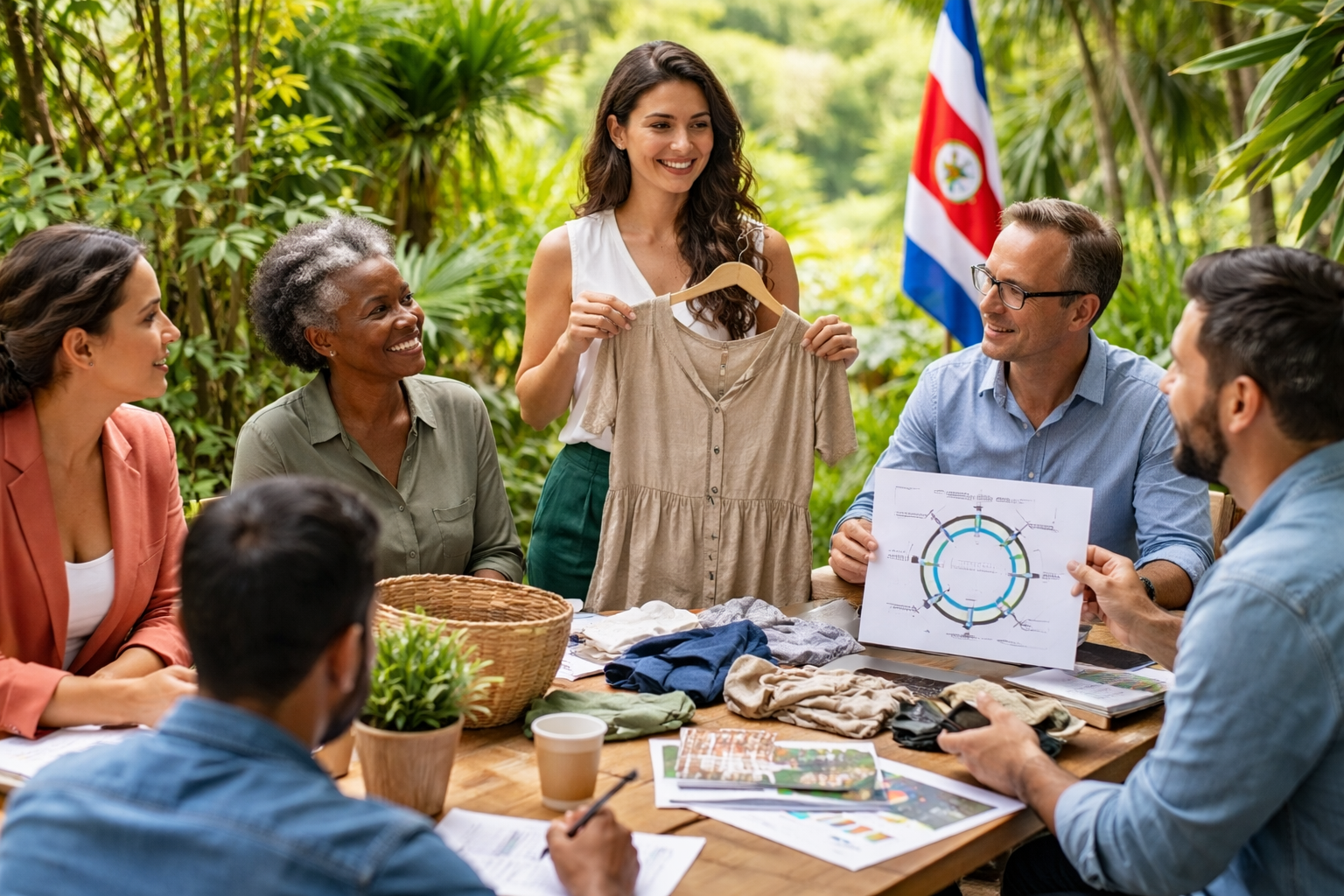
Costa Rica has emerged as a regional leader in sustainability, and its approach to circular fashion reflects a broader national commitment to environmental protection and resource efficiency. While the country does not yet have fashion-specific legislation as advanced as some global leaders, it integrates circular economy principles into national policies that directly influence the textile and fashion sectors.
By combining government strategies, industry collaboration, and grassroots innovation, Costa Rica is steadily building a circular fashion ecosystem focused on reuse, recycling, and sustainable production. These efforts align with global sustainability goals while addressing local environmental and economic priorities.
Policy Overview
Understanding Costa Rica’s circular fashion approach requires examining the policy framework that supports sustainability across industries, including textiles.
Overview Of Circular Fashion Policy Elements
| Component | Description |
|---|---|
| National Strategy | Circular economy framework guiding sustainability |
| Material Efficiency | Reduction of waste and virgin resource use |
| Recycling Systems | Promotion of textile reuse and recovery |
| Industry Collaboration | Partnerships between government and private sector |
| Innovation Programs | Support for sustainable design and production |
| Community Initiatives | Local participation in circular practices |
These components collectively shape how circular fashion is being developed in the country. They also highlight the integration of environmental and economic objectives.
National Strategy
Costa Rica’s circular fashion efforts are rooted in its National Circular Economy Strategy (ENEC), launched by the government through the Ministry of Environment and Energy. This strategy aims to transform the traditional “take-make-dispose” model into a system focused on reuse, regeneration, and sustainability.
The ENEC emphasizes:
- Reducing the use of virgin materials
- Extending product lifecycles through repair and reuse
- Promoting recycling and remanufacturing
These principles directly influence the textile sector by encouraging sustainable fashion production and consumption patterns.
Government Initiatives
- Circular Economy Programs: National-level initiatives promoting sustainable production models
- Waste Reduction Policies: Encouraging reuse and recycling across industries
- Sustainable Material Promotion: Incentives for eco-friendly and recycled inputs
- Green Public Procurement: Government preference for sustainable products
Costa Rica’s government integrates circular economy goals into multiple sectors rather than isolating fashion alone. This cross-sector approach strengthens the impact of sustainability policies.
Global Partnerships
Costa Rica participates in international initiatives aimed at transforming fashion supply chains. For example, it is part of a multi-country program supported by the Global Environment Facility and United Nations Environment Programme.
This initiative focuses on:
- Reducing hazardous chemicals in fashion production
- Promoting circular and low-carbon supply chains
- Supporting sustainable materials and innovation
Such collaborations position Costa Rica as part of a global movement toward circular fashion systems.
Industry Transition
Costa Rica’s textile industry is actively adapting to circular economy principles. Organizations like Cámara Textil Costarricense play a key role in promoting sustainability and innovation.
Industry trends include:
- Adoption of recycled and eco-friendly fibers
- Water-saving and low-impact dyeing techniques
- Focus on high-value, sustainable textile production
This shift reflects a move away from mass production toward quality, sustainability, and ethical practices.
Circular Practices
- Recycling: Converting textile waste into new materials
- Upcycling: Transforming used clothing into higher-value products
- Repair Culture: Extending garment lifespan
- Secondhand Markets: Encouraging reuse and resale
These practices are essential to building a circular fashion system. They reduce waste and create new economic opportunities.
Innovation Programs
Innovation plays a critical role in advancing circular fashion in Costa Rica. Collaborative projects between businesses, educational institutions, and technology clusters support experimentation and knowledge sharing.
For example, textile upcycling initiatives in partnership with local institutions focus on:
- Creating sustainable cooperatives
- Educating communities on textile reuse
- Generating income through circular business models
Such programs demonstrate how innovation can drive both environmental and social benefits.
Environmental Policies
Costa Rica’s broader environmental policies strongly influence circular fashion. The country has implemented measures such as:
- Reducing single-use plastics
- Promoting biodegradable materials
- Encouraging sustainable consumption
These policies create a supportive environment for circular fashion by prioritizing resource efficiency and waste reduction across all sectors.
Community Engagement
- Local Workshops: Teaching repair and upcycling skills
- Cooperatives: Supporting small-scale sustainable production
- Awareness Campaigns: Promoting responsible consumption
- Educational Programs: Integrating sustainability into training
Community involvement ensures that circular fashion is not limited to industry but becomes part of everyday life. It also strengthens social inclusion and economic resilience.
Challenges Faced
Despite progress, Costa Rica faces several challenges in advancing circular fashion:
- Limited infrastructure for large-scale textile recycling
- Higher costs of sustainable materials
- Lack of formal regulations specific to fashion
- Competition from low-cost global markets
Addressing these challenges requires continued investment, policy development, and international collaboration.
Future Outlook
Costa Rica aims to become a regional leader in circular economy practices by 2050, with fashion playing an important role in this transition.
Future priorities include:
- Expanding recycling infrastructure
- Strengthening policy frameworks for textiles
- Supporting sustainable fashion startups
- Increasing consumer awareness
These efforts will help scale circular fashion practices and integrate them more deeply into the national economy.
Final Analysis
Circular fashion in Costa Rica is driven by a combination of national policy, international collaboration, and grassroots innovation. While still evolving, the country’s approach reflects a strong commitment to sustainability and resource efficiency.
By aligning government initiatives with industry transformation and community participation, Costa Rica is building a foundation for a circular fashion future. As policies mature and infrastructure expands, the country is well-positioned to become a model for sustainable fashion development in Latin America.