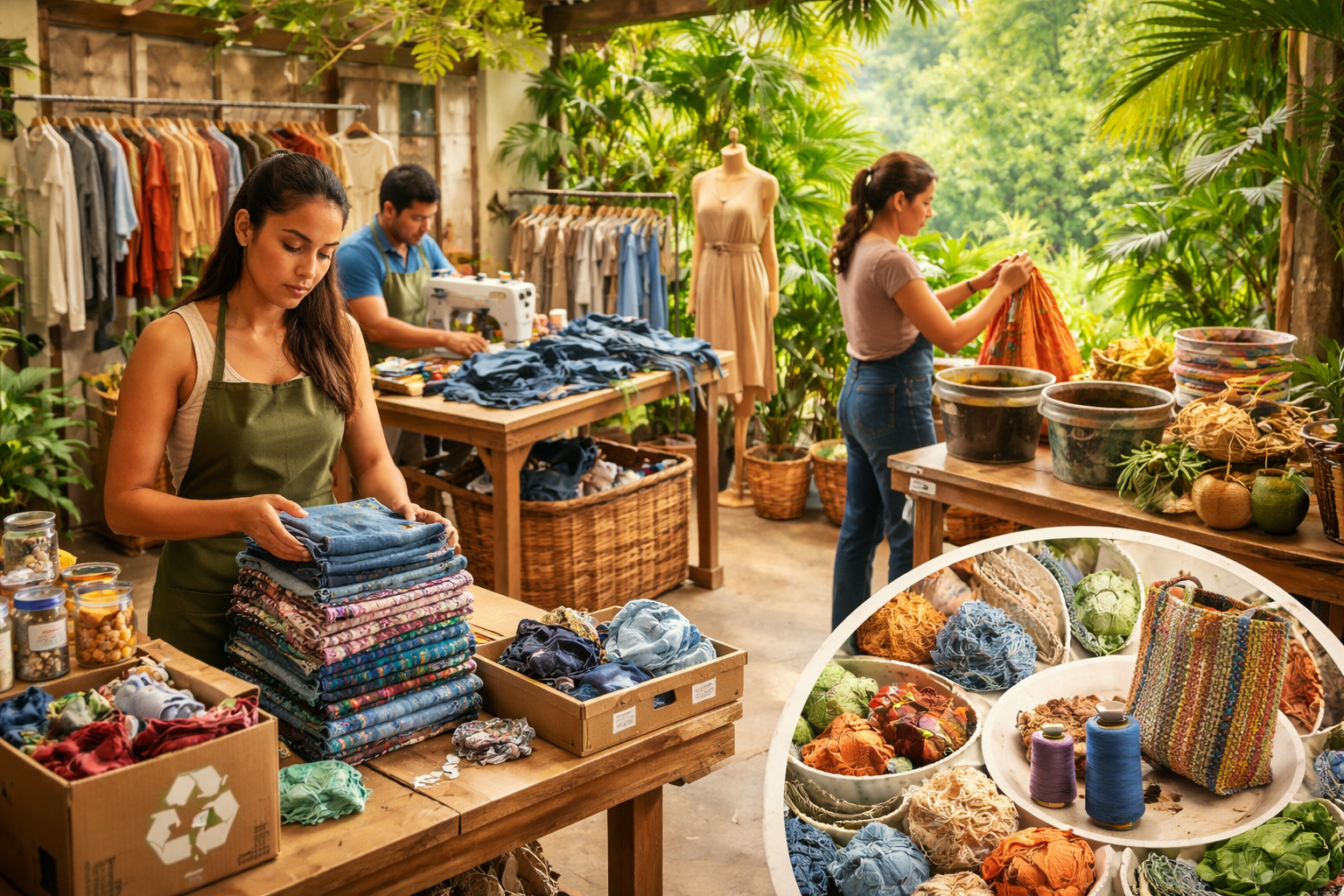
Costa Rica’s textile industry is increasingly embracing sustainable practices to reduce environmental impact and improve long-term economic resilience. As global demand for eco-friendly production rises, the concept of a circular economy has gained significant traction. This model focuses on minimizing waste, reusing resources, and extending product life cycles, making it particularly relevant for the textile sector.
The transition toward circular practices is reshaping how textiles are designed, produced, and consumed in Costa Rica. By integrating sustainability into every stage of the value chain, the industry is not only addressing environmental concerns but also creating new economic opportunities and strengthening its global competitiveness.
Industry Overview
Overview of Circular Economy in Costa Rica’s Textile Sector
| Aspect | Details |
|---|---|
| Core Concept | Resource reuse and waste reduction |
| Key Focus | Sustainable textile production |
| Primary Benefits | Lower environmental impact and cost efficiency |
| Main Practices | Recycling, upcycling, and eco-design |
| Global Relevance | Aligns with sustainability standards and demand |
Costa Rica’s commitment to sustainability provides a strong foundation for adopting circular economy practices. The country’s environmental policies and focus on renewable resources support the textile industry’s transition toward greener operations.
The circular economy model encourages businesses to rethink traditional linear production systems. Instead of a “take-make-dispose” approach, companies adopt strategies that keep materials in use for as long as possible.
Sustainable Design
Design plays a crucial role in enabling circularity. Textile companies in Costa Rica are focusing on creating products that are durable, recyclable, and easy to repair. This approach reduces waste and extends the lifespan of garments.
Eco-design also involves selecting sustainable materials such as organic fibers and recycled fabrics. By prioritizing environmentally friendly inputs, manufacturers can reduce their ecological footprint while meeting consumer demand for sustainable products.
Recycling Methods
- Material Recovery
Collecting and reprocessing textile waste into new fibers. - Fabric Reuse
Repurposing existing materials for new products. - Chemical Recycling
Breaking down fibers to create raw materials for production. - Waste Sorting
Separating textiles for efficient recycling processes.
Recycling is a cornerstone of circular economy practices. By converting waste into valuable resources, the textile industry can reduce reliance on virgin materials and lower production costs.
Supply Chain
A circular supply chain ensures that sustainability is integrated across all stages of production. In Costa Rica, collaboration among suppliers, manufacturers, and distributors is essential for achieving this goal.
Transparency and traceability are key components of a circular supply chain. Businesses are increasingly adopting digital tools to track materials and ensure ethical sourcing. This not only enhances sustainability but also builds trust with consumers.
Business Models
- Rental Services
Offering clothing for temporary use instead of ownership. - Repair Programs
Extending product life through maintenance services. - Take-Back Schemes
Collecting used garments for recycling or resale. - Resale Platforms
Encouraging second-hand markets.
Innovative business models are driving the adoption of circular practices. These approaches create new revenue streams while reducing waste and promoting responsible consumption.
Environmental Impact
Circular economy practices significantly reduce the environmental impact of textile production. Lower waste generation, reduced water usage, and decreased carbon emissions are some of the key benefits.
Costa Rica’s focus on sustainability aligns well with these outcomes. By adopting circular practices, the textile industry contributes to national environmental goals and global efforts to combat climate change.
Challenges Ahead
Despite the benefits, implementing circular economy practices comes with challenges. Limited infrastructure for recycling and high initial investment costs can hinder adoption. Additionally, changing consumer behavior requires education and awareness.
Overcoming these challenges requires collaboration between government, industry, and consumers. Policy support and incentives can accelerate the transition toward circular systems.
Innovation Trends
- Smart Textiles
Development of materials with enhanced durability and recyclability. - Digital Platforms
Tools for tracking and managing product life cycles. - Sustainable Dyes
Eco-friendly alternatives to traditional chemical dyes. - Automation Systems
Improving efficiency in recycling and production processes.
Innovation is driving the future of circular economy practices. Continuous advancements in technology and materials are enabling more efficient and sustainable textile production.
Wrapping Up
Circular economy practices are transforming Costa Rica’s textile industry by promoting sustainability, innovation, and economic growth. By focusing on resource efficiency and waste reduction, the industry is addressing environmental challenges while creating new opportunities.
The journey toward a fully circular system requires commitment and collaboration, but the benefits are substantial. As Costa Rica continues to lead in sustainability, its textile sector serves as a model for other industries seeking to balance economic development with environmental responsibility.