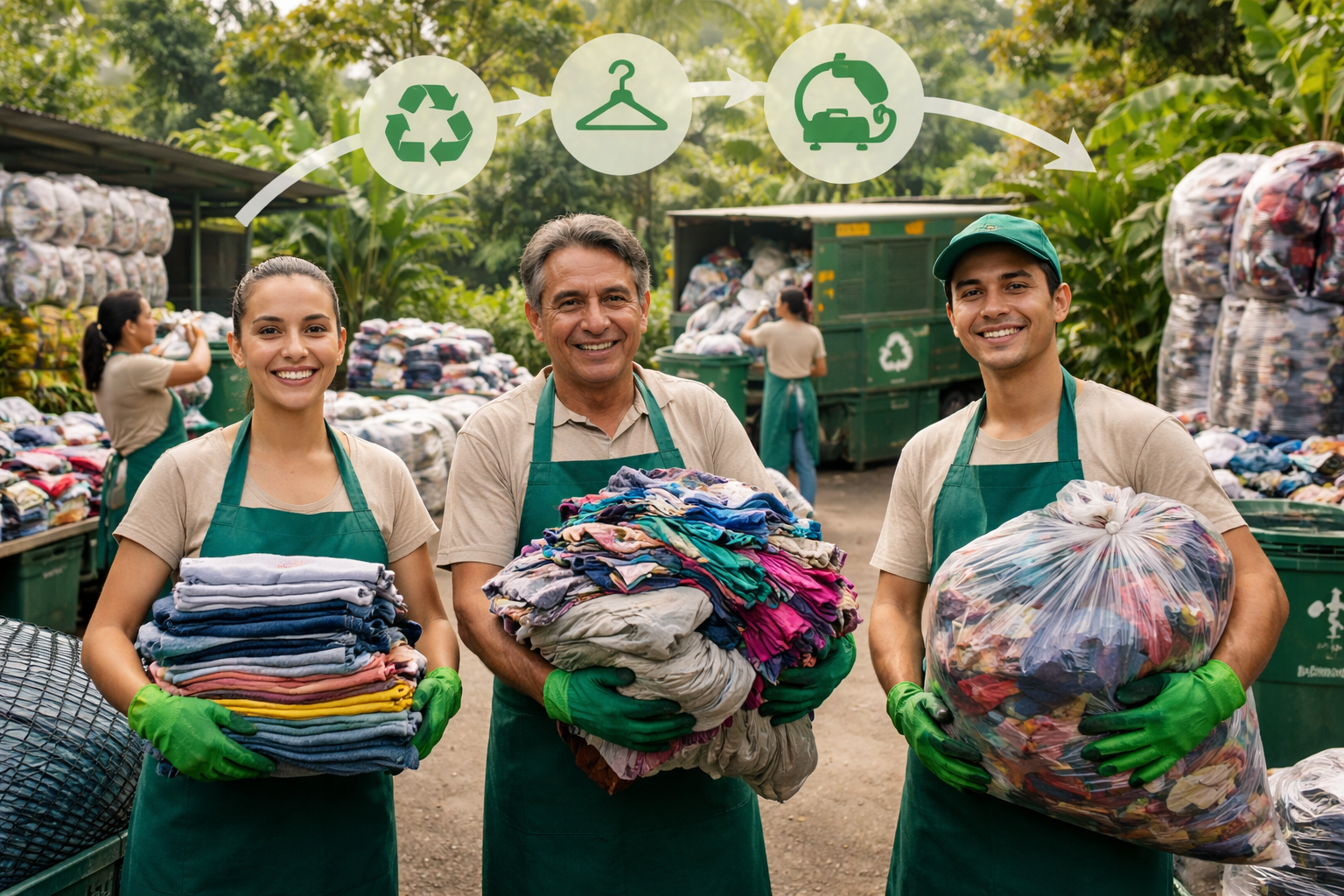
Costa Rica has emerged as a leader in sustainability, and its textile sector is increasingly embracing circular economy principles. Moving away from traditional linear models of “produce, use, dispose,” the industry is adopting systems focused on recycling, reuse, and resource efficiency. These changes are driven by environmental priorities, global market demands, and national commitments to sustainability.
A circular textile economy aims to extend the lifecycle of materials, reduce waste, and minimize environmental impact. In Costa Rica, this transformation is supported by innovation, policy frameworks, and collaboration between businesses and communities. As a result, the country is building a more resilient and eco-friendly textile ecosystem.
Circular Overview
The circular textile economy focuses on keeping materials in use for as long as possible. This involves designing products for durability, recyclability, and reuse. In Costa Rica, manufacturers are adopting these principles to reduce waste and improve sustainability.
This approach also emphasizes resource efficiency. By minimizing raw material consumption and maximizing reuse, companies can lower costs and environmental impact. Circular systems create value not only for businesses but also for society and the environment.
Overview Of Circular Textile Systems
| Element | Description |
|---|---|
| Recycling | Converting textile waste into new materials |
| Reuse | Extending product life through second-hand use |
| Closed Loop | إعادة materials back into production cycles |
| Sustainable Design | Creating products with longevity in mind |
| Waste Reduction | Minimizing landfill contributions |
Recycling Systems
Recycling is a key component of Costa Rica’s circular textile economy. कंपनियाँ are investing in technologies that allow fabrics to be broken down and transformed into new fibers. This reduces the need for virgin materials and lowers environmental impact.
Mechanical and chemical recycling methods are being explored to handle different types of textiles. These systems help divert waste from landfills and create new opportunities for resource recovery within the industry.
Reuse Models
- Growth of second-hand clothing markets
- Donation and redistribution programs
- Repair and refurbishment initiatives
- Rental and sharing platforms
- Consumer awareness campaigns promoting reuse
Reuse models play a significant role in extending the lifecycle of textiles. By encouraging consumers to reuse garments, Costa Rica reduces demand for new production and minimizes waste generation.
Closed Loop
Closed-loop systems are designed to continuously recycle materials within the production cycle. In Costa Rica, textile कंपनियाँ are working to integrate these systems into their operations, ensuring that waste materials are reintroduced into manufacturing processes.
This approach reduces dependency on raw materials and creates a more sustainable production model. Closed-loop systems also support innovation by encouraging the development of new recycling technologies and processes.
Sustainable Design
- Use of eco-friendly and biodegradable materials
- Design for durability and long-term use
- সহজ disassembly for easier recycling
- Reduction of harmful chemicals in production
- Focus on minimal waste during manufacturing
Sustainable design is the foundation of a circular textile economy. By creating products that are easier to recycle and longer-lasting, manufacturers can significantly reduce environmental impact.
Policy Support
Government policies play an important role in promoting circular practices. Costa Rica has implemented regulations and incentives that encourage sustainable production and waste management. These policies support businesses in adopting circular models.
Public-private partnerships are also driving progress. Collaboration between government agencies, उद्योग stakeholders, and environmental organizations helps create a supportive ecosystem for circular initiatives.
Industry Innovation
Innovation is at the heart of Costa Rica’s circular textile transformation. Companies are investing in new technologies, materials, and business models to improve sustainability. These innovations enhance efficiency and create competitive advantages in global markets.
Research and development efforts are focused on improving recycling methods and developing sustainable alternatives to traditional materials. This commitment to innovation ensures continuous progress in the industry.
Environmental Impact
The shift toward a circular textile economy has significant environmental benefits. Reduced waste, lower resource consumption, and decreased pollution contribute to a healthier ecosystem. These improvements align with Costa Rica’s broader sustainability goals.
By adopting circular practices, the textile industry can play a key role in addressing environmental challenges. This approach supports long-term ecological balance and responsible resource management.
Future Potential
- Expansion of recycling infrastructure
- Increased adoption of circular business models
- Greater consumer participation in sustainability efforts
- Development of advanced recycling technologies
- Strengthening of global sustainability partnerships
The future of Costa Rica’s textile industry lies in the continued growth of circular practices. As awareness and technology evolve, the potential for sustainable transformation will continue to expand.
Final Thoughts
Costa Rica’s circular textile economy represents a forward-thinking approach to sustainability. By focusing on recycling, reuse, and closed-loop systems, the industry is reducing environmental impact while creating new opportunities for growth.
Continued innovation, policy support, and community engagement will be essential for sustaining this progress. As circular practices become more widespread, Costa Rica is well-positioned to lead the way in sustainable textile production.