
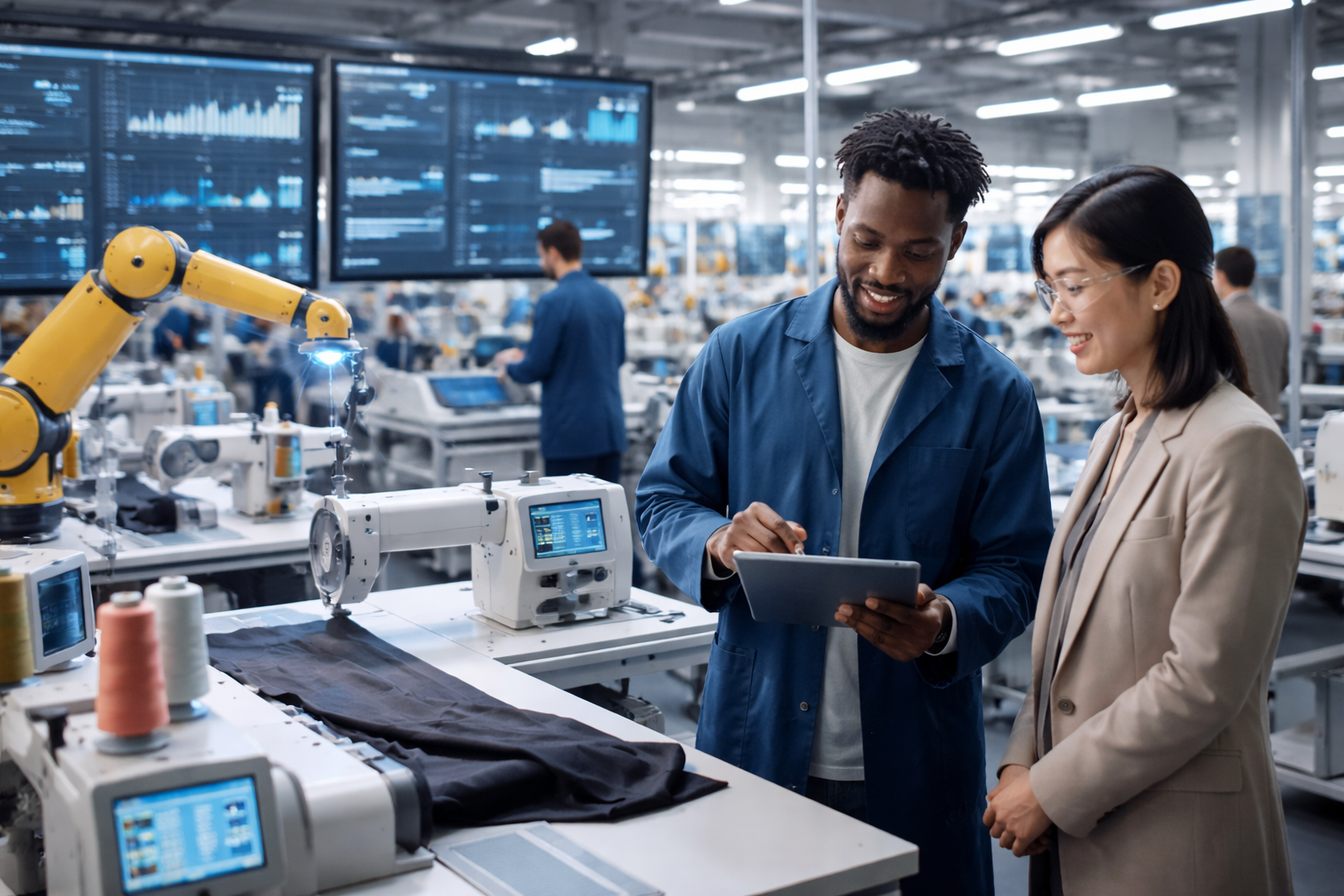
The textile industry is undergoing a significant transformation with the rise of smart factories, where automation, artificial intelligence, and real-time data integration are redefining manufacturing processes. Traditional production methods are being replaced by intelligent systems that enhance efficiency, reduce waste, and improve product quality. This shift is enabling textile manufacturers to stay competitive in a rapidly evolving global market.
Smart factories combine advanced technologies with data-driven decision-making to create highly responsive production environments. By integrating automation and AI, textile companies can streamline operations, optimize resource utilization, and deliver customized products at scale. This evolution marks a new era in textile production, driven by innovation and sustainability.
Factory Overview
Smart factories in textile production rely on interconnected systems that monitor and control every stage of manufacturing. These systems collect real-time data from machines, sensors, and processes, allowing for continuous optimization and improved decision-making.
The integration of digital technologies ensures greater transparency and efficiency. By leveraging automation and analytics, manufacturers can reduce errors, minimize downtime, and respond quickly to market demands, creating a more agile production environment.
Overview Of Smart Factories
| Component | Description |
|---|---|
| Automation | मशीन-driven processes reducing manual intervention |
| Artificial Intelligence | Intelligent systems for decision-making |
| IoT Sensors | Real-time monitoring of machines and processes |
| Data Analytics | Insights for optimization and efficiency |
| Connectivity | Integration of systems across production lines |
Automation Systems
Automation plays a central role in smart textile factories, replacing repetitive manual tasks with machine-driven processes. Automated looms, cutting machines, and sewing systems increase production speed while maintaining consistent quality.
These systems also reduce human error and improve safety in the workplace. By automating critical operations, manufacturers can achieve higher output levels and ensure uniformity across products, which is essential for large-scale production.
AI Integration
- Predictive maintenance to prevent machine breakdowns
- Quality control using image recognition systems
- Demand forecasting for better production planning
- Process optimization through machine learning
- Real-time decision-making based on data insights
Artificial intelligence enhances the capabilities of smart factories by enabling machines to learn and adapt. AI-driven systems analyze data patterns and provide actionable insights, helping manufacturers improve efficiency and reduce costs.
Real Time
Real-time manufacturing is a key feature of smart factories, allowing companies to monitor and adjust production processes instantly. Sensors and connected devices provide continuous data on machine performance, material usage, and production progress.
This real-time visibility enables quick responses to issues such as equipment malfunctions or supply chain disruptions. As a result, manufacturers can maintain consistent production flow and avoid costly delays.
Data Systems
- Collection of data from sensors and machines
- Centralized data management platforms
- Advanced analytics for performance evaluation
- Integration with enterprise resource planning systems
- Continuous feedback loops for process improvement
Data systems form the backbone of smart factories, enabling informed decision-making. By analyzing large volumes of data, manufacturers can identify inefficiencies and implement targeted improvements.
Production Efficiency
Smart factories significantly improve production efficiency by optimizing resource utilization and reducing waste. Automated systems ensure precise material handling, minimizing errors and excess usage.
Efficiency gains also come from reduced downtime and faster production cycles. By maintaining consistent operations, manufacturers can meet demand more effectively and improve overall profitability.
Quality Control
Quality control in smart factories is enhanced through advanced monitoring and inspection systems. AI-powered cameras and sensors detect defects in real time, ensuring that only high-quality products move forward in the production process.
This proactive approach reduces the need for rework and minimizes waste. Consistent quality standards also strengthen brand reputation and customer satisfaction.
Sustainability Focus
- Reduction of energy consumption through optimized processes
- Minimization of material waste and recycling initiatives
- Use of eco-friendly production techniques
- Monitoring of environmental impact in real time
- Support for circular economy practices
Sustainability is a major advantage of smart factories. By improving efficiency and reducing waste, textile manufacturers can lower their environmental footprint while maintaining high productivity.
Workforce Shift
The adoption of smart factory technologies is transforming the workforce. While automation reduces the need for manual labor in certain areas, it also creates demand for skilled workers in areas such as data analysis, machine operation, and system management.
Training and upskilling programs are essential to prepare workers for these new roles. A technologically skilled workforce ensures that smart factories operate effectively and continue to innovate.
Future Outlook
- Expansion of fully autonomous production systems
- Greater integration of AI and machine learning
- Increased customization and on-demand manufacturing
- Enhanced collaboration across global supply chains
- Continued focus on sustainability and innovation
The future of textile production lies in the continued evolution of smart factories. As technologies advance, manufacturers will gain even greater control over production processes, enabling higher efficiency and flexibility.
Closing Reflections
Smart factories are revolutionizing textile production by combining automation, artificial intelligence, and real-time manufacturing. These technologies are not only improving efficiency and quality but also enabling sustainable and flexible production models.
As the industry continues to evolve, embracing smart factory innovations will be essential for long-term success. By leveraging advanced technologies and adapting to changing demands, textile manufacturers can remain competitive and drive future growth.