
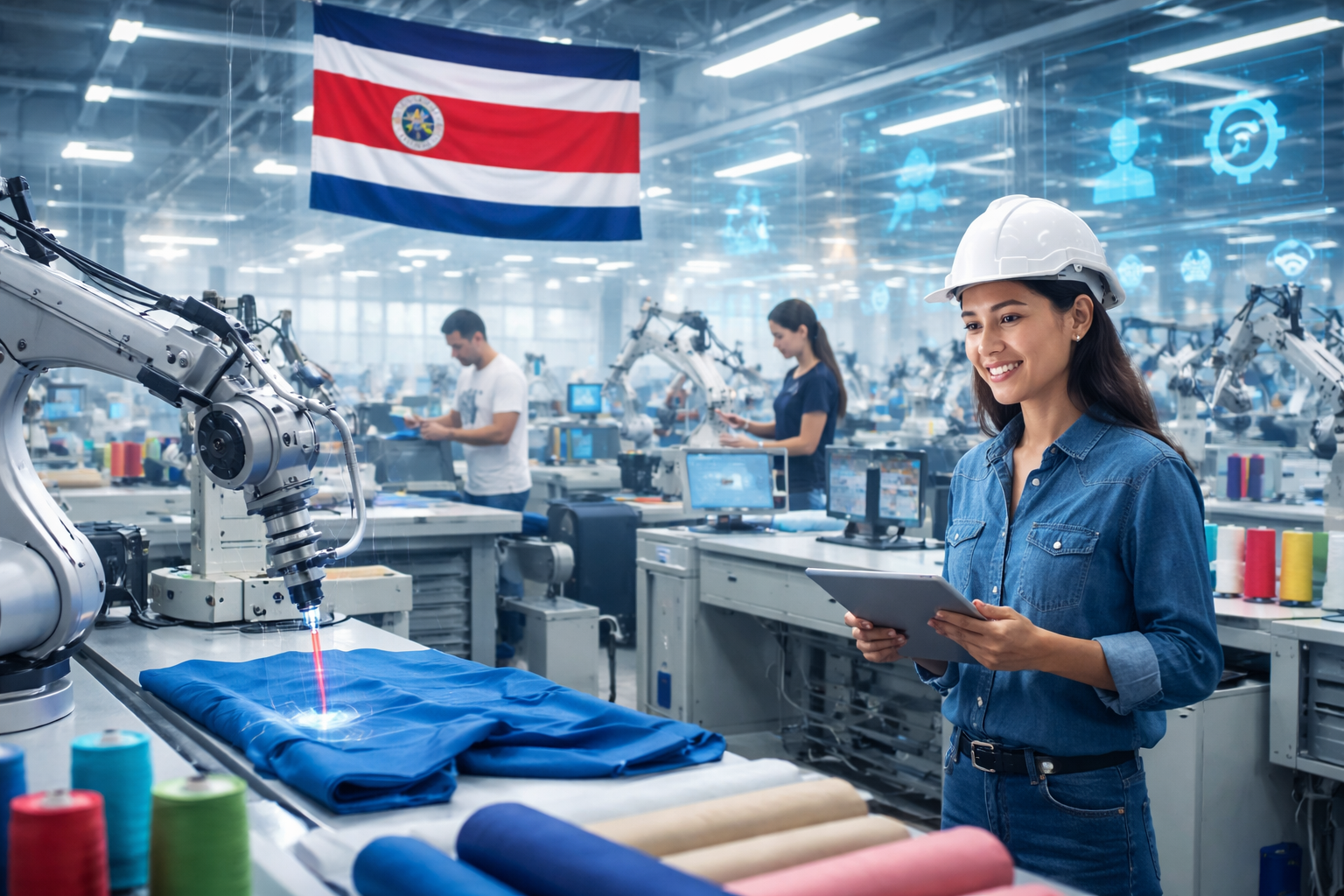
Costa Rica’s textile manufacturing sector has undergone a significant transformation driven by innovation and technology adoption. Moving away from traditional low-cost production models, the industry now emphasizes sustainability, specialization, and advanced manufacturing processes. This shift has allowed Costa Rica to position itself as a competitive player in global textile markets.
Technology adoption in the sector is not only enhancing efficiency but also enabling high-value production. From automation to digital printing and smart textiles, innovation is reshaping how manufacturers operate. This article explores the key technologies, drivers, and challenges influencing Costa Rica’s textile manufacturing evolution.
Sector Overview
Technology Adoption Framework
| Element | Description |
|---|---|
| Automation | Use of machines for cutting, stitching, and production |
| Digitalization | Integration of digital tools and smart systems |
| Sustainable Tech | Eco-friendly processes and materials |
| Advanced Textiles | Development of technical and specialized fabrics |
| Industry Support | Role of institutions and policies |
Automation Trends
Automation is increasingly becoming a cornerstone of textile manufacturing in Costa Rica. Factories are adopting automated cutting and stitching systems to improve precision, reduce waste, and increase production speed. These technologies help manufacturers maintain consistent quality while meeting global demand.
Despite its advantages, automation adoption varies across the sector. Larger firms have more resources to invest in advanced machinery, while smaller manufacturers often face financial constraints. Nevertheless, gradual adoption is helping bridge efficiency gaps and improve competitiveness.
Digital Integration
Digital technologies are transforming production processes and business operations. Digital printing, for example, allows manufacturers to create customized designs with greater flexibility and lower costs. This capability is particularly valuable for small-batch production and niche markets.
In addition, digital tools are improving supply chain management and communication with global clients. Real-time tracking, design software, and data analytics enable better decision-making and operational efficiency. These innovations are essential for maintaining competitiveness in international markets.
Sustainable Innovations
- Use of recycled polyester and organic cotton
- Adoption of natural dyeing techniques
- Reduction of water and energy consumption
- Implementation of eco-friendly production systems
Sustainability is a defining feature of Costa Rica’s textile industry. Manufacturers are integrating environmentally friendly technologies to reduce their ecological footprint. Eco-conscious practices not only align with global trends but also attract international brands seeking responsible sourcing.
Sustainable innovation also enhances brand value and market positioning. By focusing on green technologies, Costa Rican manufacturers differentiate themselves from competitors and meet the growing demand for ethical products.
Advanced Textiles
The development of advanced and technical textiles is a key area of innovation. Companies are increasingly producing specialized fabrics for industries such as healthcare, automotive, and sportswear. These high-value products require advanced manufacturing techniques and expertise.
A notable example is the expansion of medical textile production, with new facilities dedicated to producing implantable textile components and polymer-based solutions. This shift toward technical textiles reflects the industry’s move toward higher-value segments.
Institutional Support
- Industry associations promoting innovation and training
- Collaboration with academic and research institutions
- Government incentives for modernization
- Support for export-oriented production
Organizations like Costa Rica’s textile associations play a critical role in driving innovation. They facilitate knowledge transfer, provide training, and support partnerships between businesses and research institutions.
Government policies also encourage technology adoption through incentives and free-trade zones. These initiatives create a favorable environment for investment and modernization, strengthening the sector’s global competitiveness.
Smart Manufacturing
Costa Rica is emerging as a leader in smart manufacturing within Latin America. The integration of robotics, automation, and advanced production systems is enhancing efficiency and product quality. These technologies enable manufacturers to produce complex and specialized textile products.
Smart manufacturing also supports integration into global value chains. By adopting advanced technologies, Costa Rican firms can meet international standards and collaborate with global brands. This capability is essential for long-term growth and sustainability.
Adoption Challenges
- High cost of advanced machinery and technology
- Limited access to raw materials
- Skill gaps in operating advanced systems
- Competition from low-cost manufacturing countries
Despite progress, the sector faces several challenges in adopting new technologies. Financial barriers make it difficult for smaller firms to invest in advanced equipment. Additionally, reliance on imported raw materials increases costs and supply chain risks.
Addressing skill gaps is another critical issue. Advanced technologies require trained personnel, making workforce development essential for successful adoption.
Growth Opportunities
Technological innovation presents significant growth opportunities for Costa Rica’s textile sector. The increasing demand for sustainable and specialized products creates new market niches. By leveraging technology, manufacturers can expand into high-value segments and increase exports.
Collaboration and continuous innovation will be key to unlocking these opportunities. Investments in research, training, and infrastructure can further strengthen the sector’s position in global markets.
Future Outlook
Costa Rica’s textile manufacturing sector is evolving into a technology-driven and sustainability-focused industry. Innovation in automation, digitalization, and advanced textiles is reshaping production and creating new opportunities for growth.
As the industry continues to modernize, overcoming challenges such as cost and skill gaps will be essential. With strong institutional support and a commitment to innovation, Costa Rica is well-positioned to remain a competitive and forward-looking player in the global textile market.