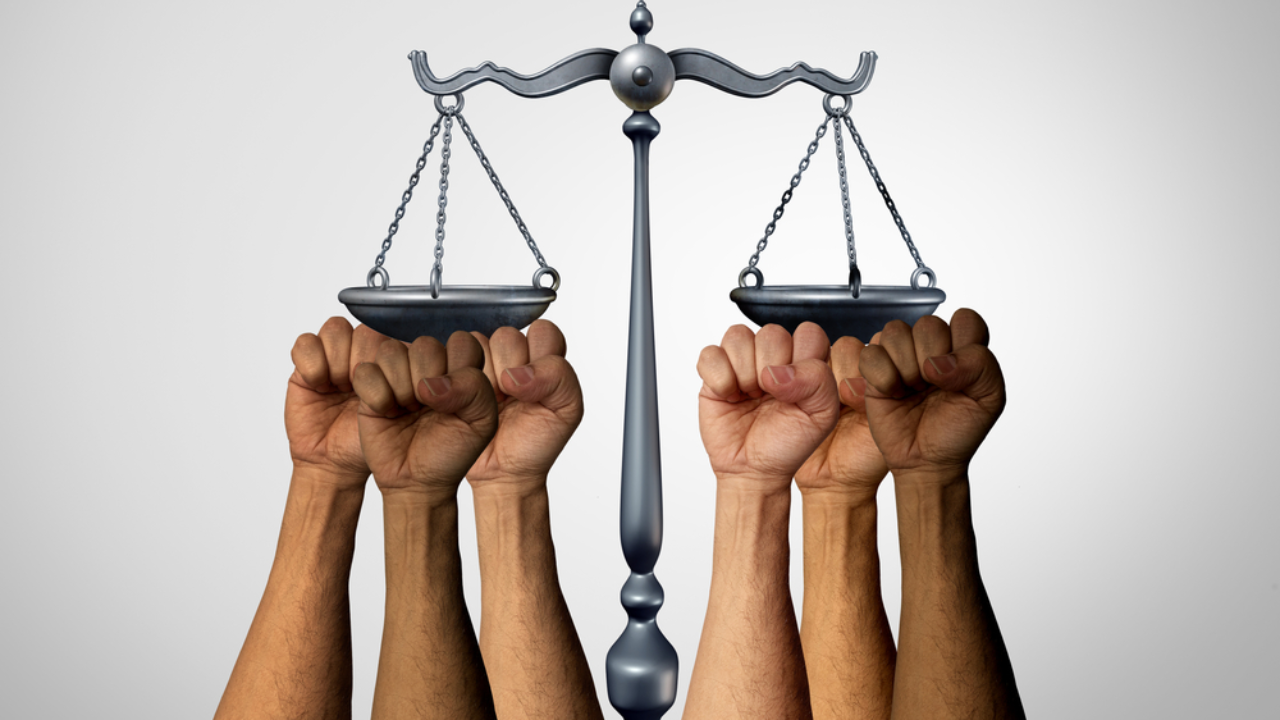
Criminal justice reform has become a central issue in advancing racial equity in the United States. Historically, the justice system has disproportionately affected communities of color, resulting in mass incarceration, unequal sentencing, and systemic bias. Reform efforts aim to address these disparities while promoting fairness, rehabilitation, and community well-being.
Historical Context
Mass incarceration grew rapidly in the 1980s and 1990s due to “tough on crime” policies.
Disproportionate policing affected Black, Indigenous, and Hispanic communities.
Mandatory minimum sentences and “three strikes” laws contributed to long-term imprisonment for non-violent offenses.
Limited access to legal resources created inequities in representation and fair trial outcomes.
Historical bias in sentencing perpetuated racial and economic disparities in the criminal justice system.
Historical Disparities in Criminal Justice
Issue
Impact
Mass Incarceration
One in 100 U.S. citizens behind bars; disproportionately affects communities of color.
Disproportionate Policing
Higher arrest rates for minority populations.
Mandatory Minimum Sentences
Long prison terms for non-violent offenses.
Limited Legal Access
Low-income defendants face unequal representation.
Racial Bias in Sentencing
Longer and harsher sentences for people of color compared to white counterparts.
Key Goals of Criminal Justice Reform
Reduce mass incarceration by implementing alternatives to imprisonment for non-violent offenses.
End racial and economic disparities in policing, sentencing, and prison populations.
Promote rehabilitation through education, job training, and mental health services.
Ensure access to legal representation for all, regardless of income.
Eliminate discriminatory practices such as cash bail systems that disproportionately affect low-income individuals.
Goals of Criminal Justice Reform
Goal
Description
Reduce Mass Incarceration
Alternatives to prison for non-violent offenses, diversion programs, probation.
End Racial Disparities
Address bias in policing, sentencing, and correctional practices.
Promote Rehabilitation
Education, vocational training, and mental health support for inmates.
Legal Representation
Provide equitable access to defense attorneys for low-income individuals.
Eliminate Discriminatory Practices
Reform bail and sentencing laws to reduce systemic inequities.
Key Reform Strategies
Sentencing reform to remove mandatory minimums and reduce disproportionate punishments.
Police accountability including body cameras, community oversight boards, and de-escalation training.
Reentry support for formerly incarcerated individuals, including employment assistance, housing, and counseling.
Restorative justice programs that focus on reconciliation, community involvement, and reducing recidivism.
Data collection and research to monitor disparities and evaluate reform outcomes.
Implement body cameras, oversight boards, and de-escalation training.
Reentry Support
Offer employment, housing, and counseling services for formerly incarcerated individuals.
Restorative Justice Programs
Focus on repairing harm and integrating community involvement.
Data Collection & Research
Track disparities, measure outcomes, and inform policy decisions.
Impact on Racial Equity
Reduced incarceration rates help decrease the social and economic impact on communities of color.
Improved trust in law enforcement through accountability and transparency.
Enhanced access to justice ensures fair treatment for all citizens.
Economic empowerment as formerly incarcerated individuals reintegrate into society with skills and opportunities.
Strengthened community resilience as reforms prioritize rehabilitation and prevention over punishment.
Impacts on Racial Equity
Impact Area
Outcome
Reduced Incarceration
Fewer individuals imprisoned, especially from marginalized communities.
Law Enforcement Trust
Improved relationships between police and communities.
Access to Justice
Fair legal representation and equitable treatment for all.
Economic Empowerment
Job training and reentry programs reduce unemployment among formerly incarcerated individuals.
Community Resilience
Programs promote prevention, rehabilitation, and stronger local networks.
Challenges to Reform
Political resistance from policymakers supporting tough-on-crime policies.
Institutional inertia in law enforcement and judicial systems.
Limited funding for alternatives, education, and reentry programs.
Public perception and fear of crime may slow adoption of reform initiatives.
Complex systemic issues require long-term commitment and collaboration across multiple sectors.
Challenges and Solutions
Challenge
Solution
Political Resistance
Advocacy, lobbying, and public awareness campaigns.
Institutional Inertia
Training, oversight, and accountability measures in law enforcement and courts.
Limited Funding
Secure federal, state, and private grants for reform programs.
Public Perception
Educate communities on benefits of rehabilitation and alternative sentencing.
Systemic Complexity
Coordinate across agencies, NGOs, and community groups for comprehensive reform.
Closing Reflections
Criminal justice reform is essential for achieving racial equity in the United States. Efforts to reduce mass incarceration, end racial disparities, promote rehabilitation, and ensure fair legal representation address both social and systemic inequalities. By implementing strategic reforms, monitoring outcomes, and supporting marginalized communities, the justice system can become more equitable, effective, and humane. Long-term commitment to these initiatives is necessary to create a system that prioritizes fairness, opportunity, and community well-being for all.