

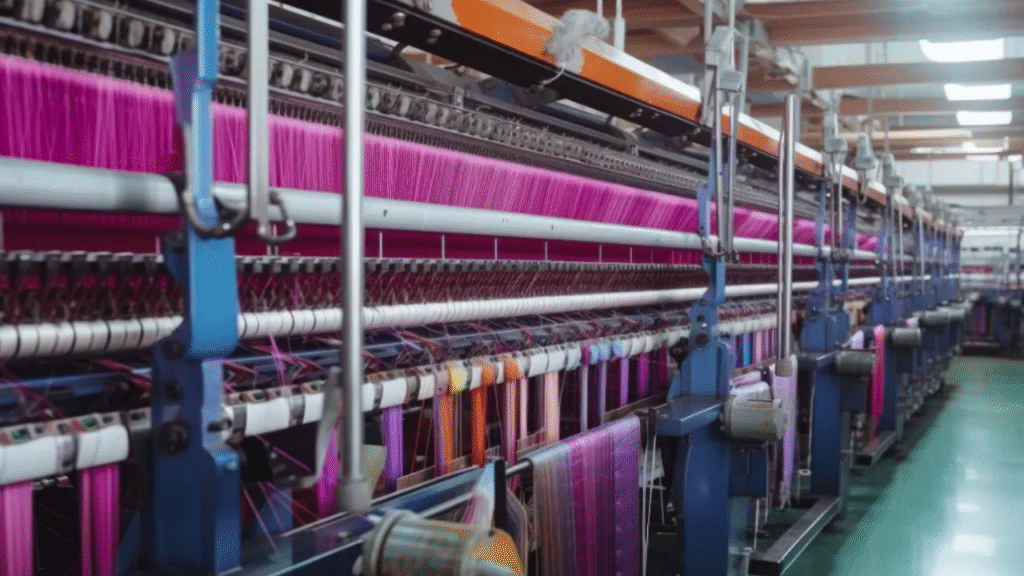
Pressure on Costa Rica’s textile industry has intensified as global competition, rising imports, and regulatory constraints reshape the market. Sector vulnerability has become more visible as manufacturers navigate high operating costs, strict compliance rules, and the challenge of differentiating themselves from low-cost suppliers abroad. Industry resilience now depends on strategic adaptation, innovation, and alignment with national sustainability goals.
Overview
Textile production in Costa Rica includes small workshops, medium-sized garment factories, uniform suppliers, and technical-textile players. Market performance is influenced by high labor standards, environmental regulations, and reliance on imported raw materials. Competitive strength increasingly depends on specialization rather than large-scale commodity manufacturing.
| Industry Aspect | Current Condition | Effect on Producers |
|---|---|---|
| Raw Material Dependence | Heavy reliance on imported fibers and fabrics | Higher costs and supply-chain risks |
| Labor Environment | Strong protections and high wages | Competitive disadvantage in global markets |
| Market Structure | Mostly small and medium firms | Limited economies of scale |
| Export Orientation | Focus on niche and technical textiles | Need for consistent quality and compliance |
| Regulatory Demands | Strict environmental and labor rules | Higher operational obligations |
Dependence on Imported Raw Materials
- Heavy reliance on foreign fabrics, threads, dyes, and machinery increases production costs.
- Shipping delays and fluctuations in global supply chains create uncertainty for manufacturers and buyers.
- Limited domestic production of fibers restricts strategic flexibility, especially during peak demand.
- Exchange-rate shifts make imported materials more expensive and unpredictable.
- High import duties and port fees add cost pressure on small and medium firms.
Impact Summary
- Profit margins decline when global shipping costs rise.
- Production planning becomes difficult without stable access to raw materials.
- International buyers often prefer suppliers with reliable, cost-efficient sourcing—an area where Costa Rica faces constraints.
Competition from Low-Cost Manufacturing Countries
- Intense competition from countries like China, Bangladesh, and Vietnam puts Costa Rican producers at a price disadvantage.
- Mass-production markets favor large-volume, low-cost suppliers, making it difficult for Costa Rica’s firms to compete on quantity.
- Regional competitors with lower wages and fewer compliance requirements attract global buyers seeking budget-friendly sourcing.
- Fast-fashion companies prefer suppliers with extremely low labor costs, widening the gap further.
- International trade agreements may benefit foreign producers more than local manufacturers.
Competitive Reality
- Costa Rican firms are pushed toward quality-driven, small-batch, or specialized segments.
- Branding, sustainability, and craftsmanship become essential tools for differentiation.
- Competing solely on price becomes almost impossible in the global landscape.
Domestic Market Saturation and Import Surge
- Local markets face an influx of cheap imported clothing, making it hard for Costa Rican brands to maintain competitive pricing.
- Imported garments often undercut local production by 30–60 percent due to lower manufacturing costs abroad.
- Informal imports and unregulated retailing raise additional challenges for formal local manufacturers.
- Consumer preference tends to shift toward affordable fast-fashion brands, impacting domestic textile survival.
Domestic Market Challenges
- Small producers struggle to match the retail prices of imported clothing.
- Investment in local branding becomes crucial but financially difficult for smaller workshops.
- Market share loss leads to reduced production volumes, affecting profitability.
High Labor Costs and Skill Gaps
- Labor wages in Costa Rica are significantly higher than in many textile-exporting countries.
- Strong worker protections, while beneficial for employees, create higher overhead for employers.
- Skill shortages appear in areas like technical textiles, digital design, and automated machinery operation.
- Training investments become necessary but expensive for small producers.
Workforce Dynamics
- Workforce quality remains strong, but advanced technical skills are not widespread.
- Modern machinery requires specialized training that many manufacturers cannot easily fund.
- Retention of skilled operators is difficult due to competition from other industries.
Regulatory and Compliance Burdens
- Strict environmental regulations increase compliance costs, especially for dyeing, water treatment, and waste management.
- Complex labor laws require extensive documentation and administrative oversight.
- Occupational safety requirements add additional layers of cost and monitoring.
- Failure to meet environmental rules can result in fines or suspension, creating operational risk.
Regulatory Pressures
- Compliance remains essential for sustainable growth but requires substantial investment.
- Smaller factories face greater difficulty meeting regulatory demands due to limited capital.
- Paperwork and inspections slow down operations and reduce flexibility.
Technology Gaps and Limited Capital Access
- Limited access to financing restricts investment in modern equipment such as automated cutters or digital printers.
- Outdated machinery reduces production speed, accuracy, and consistency.
- Technology adoption is uneven across the sector, creating disparities between advanced and less-equipped factories.
- Lack of digital workflow systems hinders efficiency in inventory, design, and production planning.
Modernization Obstacles
- Small producers often depend on manual labor rather than automation.
- High-interest loans discourage infrastructure upgrades.
- Global buyers increasingly expect technological capability, creating performance pressure.
Export Challenges and Market Access Issues
- Meeting international quality certifications requires investment in testing and documentation.
- Logistics costs for exporting remain high due to Costa Rica’s geographic position and port expenses.
- Competing for visibility in high-value markets requires marketing and branding resources.
- Trade barriers or changing global trade preferences can impact demand unpredictably.
Export Realities
- Niche segments offer promise but demand high consistency.
- Technical textiles show growth potential but require research and specialized machinery.
- Export survival depends on long-term buyer relationships and compliance credibility.
Summary: Key Challenges for Textile Producers
| Challenge Area | Core Issue | Impact on Producers |
|---|---|---|
| Imports | Cheap foreign clothing and raw materials reliance | Lower competitiveness and higher production costs |
| Global Competition | Low-cost overseas manufacturers | Pressure to specialize and differentiate |
| Regulation | Strict labor and environmental rules | Higher operational expenses |
| Technology Gap | Limited modernization funding | Reduced efficiency and output quality |
| Labor Costs | High wages and skill shortages | Narrower margins and training needs |
| Export Barriers | Logistics and certification requirements | Difficult entry into premium markets |
Key Takeaways
Industry pressures facing Costa Rica’s textile producers reflect a complex mix of global competition, regulatory obligations, and cost challenges. Sector survival increasingly depends on innovation, specialization, and sustainable practices rather than mass production. Industry potential remains strong, but achieving long-term competitiveness requires coordinated efforts in technology adoption, workforce development, and strategic market positioning.